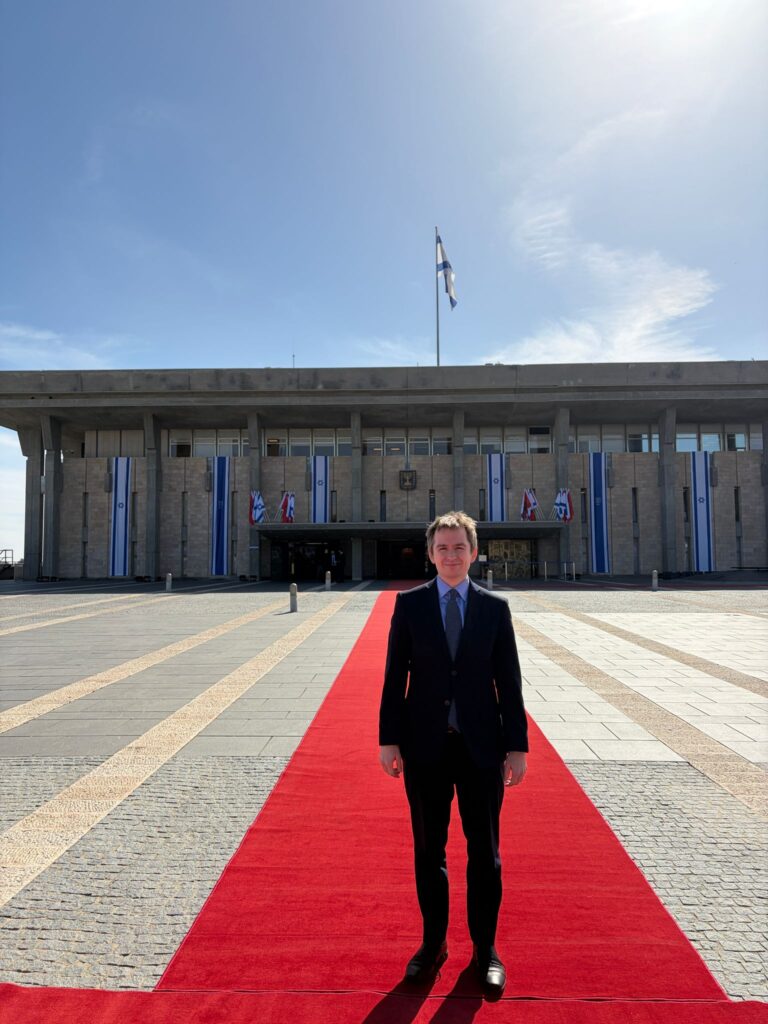
LFI honorary chair Mark Sewards has written the article below for Jewish News. Click here to read the original.
This week, I am visiting Israel and Bahrain; my first trip to the region since becoming Labour Friends of Israel’s new parliamentary chair.
My visit comes at a moment of huge opportunity and challenge. Israelis will go to the polls later this year, in an election which offers the chance to bring the Netanyahu era to a long-overdue end. We must do all we can to support our allies on the centre-left in Israel to help them take this historic opportunity.
The Palestinian Authority has pledged thorough-going reforms; an essential prerequisite of future progress towards a two-state solution. The US is attempting to move ahead with the next stage of the Gaza peace plan. And, as they have done on multiple occasions over the past 17 years, the Iranian people have bravely shown their desire to be rid of the brutal and repressive regime which has ruled over them for nearly five decades. Change in Tehran offers the prospect of profound and positive change both within Iran and throughout the region. A change of regime in Iran could be the catalyst which ends the principal source of terror, extremism, and instability in the entire region.
Britain has strong historic, economic, and strategic relationships throughout the region, not least with Israel, a fellow democracy.
It’s no secret that some of the UK Government’s decisions have caused friction with Israeli Government. That’s natural, given the political complexion of both administrations. But some of those decisions have also raised deep concern among our allies on the Israeli centre-left. This comes at a time when the UK government has recognised that Britain’s national interest requires it to maintain strong political ties with other longstanding allies, including the US, India and Turkey, despite their governing parties also being of a very different political ilk to our own.
Despite the challenges to relations during the conflict in Gaza, bilateral partnerships between the UK and Israel have continued to flourish, demonstrating the depth and breadth of our longstanding, mutually beneficial alliance.
Over the past five years, more than 300 Israeli companies have expanded into the UK, generating almost £1bn in investment. Total trade amounted to £6.2bn in the year to June 2025, representing a 3.2 percent increase. Israel supplies one in seven NHS prescriptions, which saves the health service nearly £3bn annually. And Israel remains a major supplier of arms to the UK, with its military equipment saving the lives of British forces in combat zones, and its intelligence-sharing helping prevent terror attacks here at home.
If Britain is to use our influence within the region to promote positive change, including a long-term peace settlement for Israel and Palestine, it is imperative that we reset our relations with Israel, especially if there is a change in Government. We are, after all, two liberal democracies with shared interests.
First, the ceasefire, which both LFI and the Labour Government have long called for, has been in place for the last three months. We should acknowledge the progress that is being made. While more aid for Gaza is desperately needed, and reconstruction must start as soon a possible, we can now see Israel facilitating the daily entry of 600-800 trucks carrying humanitarian goods, meeting its obligations as set out in the ceasefire agreement.
Second, we should also recognise Israel’s continuing legitimate security concerns. Iranian proxy Hamas, which carried out the deadliest pogrom against the Jewish people since the Holocaust on 7 October, continues to refuse to disarm and has used Israel’s withdrawal to the “yellow line” to reassert its power over the people of Gaza. Disarming Hamas and ensuring it has no role in the future governance of Gaza is absolutely essential to secure peace and security for Israelis and Palestinians. To underline our commitment, Britain should take action, including by applying sanctions, against entities operating in the UK which fund or otherwise support terrorist organisations working to destroy Israel including Hezbollah, Hamas and Iran’s IRGC.
Third, last summer, the government paused negotiations towards a free trade agreement with Israel – one of six priority countries, including Turkey and India, it adopted in July 2024. We should now restart these talks, including establishing adjacent trade and collaboration platforms in areas of mutual strength such as in health technology.
Fourth, in an increasingly dangerous and uncertain world, we should bolster the long-standing defence and security relationship between Israel and the UK. As a first step, we must allow Israelis to once again enrol in courses at the Royal College of Defence Studies.
Finally, we need to get our own house in order and tackle the scourge of hate, including against those who do not want to see a peaceful solution for Israel or Palestine and those who spread hatred. The government must continue to speak out unequivocally against its many manifestations, including the ban on Israeli football fans visiting our second city; the effort to bar my Jewish parliamentary colleague, Damien Egan, from visiting a school in his constituency; demonstrations outside Synagogues; the intimidation and harassment of Jewish students on campuses; and the incitement to violence in the call to “globalise the intifada”. It should take action to support Israeli nationals in the UK and Israeli businesses which have been targeted and underline Labour’s unwavering opposition to the antisemitic BDS movement. And, most importantly, it must make clear that the attempt to demonise and delegitimise the world’s only Jewish state is at the heart of contemporary antisemitism.
Labour has a long history of support for Israel and the Jewish community here in Britain. It’s time to draw on that proud tradition to restore the bilateral relationship between the UK and our friends and allies in Israel.