This week we’re covering Iran’s decision to break the truce by attacking Israel, continued fighting in Lebanon and Egypt-hosted negotiations for the ceasefire in Gaza.
Top stories
Israel-Iran conflict
- Israel and Iran appear to have ceased fire following Iran’s launch of a barrage of ballistic missiles at Israel for the first time since a ceasefire was agreed in April. Tehran had fired four salvos since midnight on Sunday. The Iran-aligned Houthi rebels in Yemen also fired two missiles at Israel. In response, Israel carried out strikes in Iran, hitting military targets in the centre and west of the country. The president of Lebanon sharply criticised Tehran.
US-Iran Negotiations
- Iran is refusing to make any concessions regarding its nuclear programme, insisting that negotiations on the matter can occur only once a preliminary ceasefire – including the lifting of the US blockade, imposed after Iran shut the Strait of Hormuz – is already in place. The US is demanding that Iran’s roughly 440kg of enriched uranium be removed from the country. That amount would be enough, if further enriched, for 10 nuclear weapons, according to the IAEA.
Gaza
- Egypt is hosting a new round of negotiations with leaders from Hamas and other Palestinian factions. The negotiations are aimed at addressing some of the toughest areas of dispute within phase two of the Gaza ceasefire, including the disarmament of Hamas, Israeli withdrawal from parts of Gaza and the makeup of a Gaza government. Board of Peace negotiators – established to oversee the ceasefire – have been talking to both sides on the disarmament issue. Iranian-backed Hamas continues to refuse to disarm.
Terror in Israel
- An Arab Israeli terrorist opened fire in several locations in a shooting spree in central Israel on Sunday, killing an IDF reservist who served as a civil defense squad member, and wounding five other people. The terrorist was shot dead by security forces.
Antisemitism
- The government’s independent advisor on antisemitism, Lord Mann, has published a report on antisemitism and other forms of racism within the NHS. The health secretary, James Murray, responded by saying the government has accepted the recommendations put forward in the report. These include barring staff from wearing political badges on their uniforms, such as pro-Palestinian symbols, as well as stronger accountability for NHS managers, improved recording and monitoring of racist incidents, and enabling more patients to record their ethnicity as Jewish. The review follows a rise in antisemitism against both Jewish staff and patients in the health service.
In Depth: US-Iran talks continue despite renewed fighting
Israel says that Iran has fired nearly 30 missiles at the country since Sunday night. In response, Israel claims it has struck and dismantled Iranian defence systems across several areas of the country. All the ballistic missiles launched from Iran and its proxy, the Houthis, in Yemen were intercepted. Following an intervention by Donald Trump, both sides appear to have ceased fire.
Tehran says its resumption of strikes is connected to the situation in Lebanon, where fighting has continued despite a renewed ceasefire between Israel and Lebanon – rejected by Hezbollah – last week. The president of Lebanon, Joseph Aoun, has accused the Islamic Republic of using Lebanon “for the sake of your [Iran’s] own interest” and said: “You are not trying to help us. The people of Lebanon are paying the price.”
The talks last week led to Israel and Lebanon to agree to create a number of “pilot” security zones inside Lebanon from which Hezbollah terrorists would be banned. Hezbollah has condemned the peace talks and the ceasefire. The ceasefire calls for a cessation of Hezbollah fire and the evacuation of all Hezbollah operatives from areas south of the Litani river. UN security council resolutions following the 2006 war between Israel and Hezbollah demanded that the terror group pull out of the area – which is close to the Israeli border – but have never been implemented, allowing Hezbollah to launch periodic missile and drone barrages into northern Israel.
Israeli strikes in southern Beirut targeted Hezbollah’s military headquarters in response to the Iran-backed terror group’s continuing rocket fire on northern Israel. The IDF said that it struck and destroyed the launchers used by Hezbollah to fire the rockets. Four Israeli reservist soldiers were moderately wounded by an explosive-laden drone launched by Hezbollah at southern Lebanon, where the IDF continues to operate in a buffer zone designed to protect northern Israel. In southern Lebanon, IDF troops captured Beaufort Ridge, where a vast underground infrastructure was uncovered designed by Hezbollah to launch attacks at Israel.
In wider negotiations to end the conflict in the region, Iran is seeking to link the two theatres and protect Hezbollah, its most significant proxy. Despite the resumption of fire, mediation efforts to end the war between Iran and the US were continuing. Last week, Iran and the US had reportedly agreed to an MOU that would extend the ceasefire to 60 days, during which time they would discuss how to address Iran’s stockpile of highly enriched uranium, with the Strait of Hormuz also a major factor. It remains unclear whether the leadership of both states have agreed to these terms. It is also not clear whether other outstanding issues – including Iran’s production of ballistic missiles, its support for terrorist proxies or the regime’s escalating internal repression – will factor into negotiations.
The reopening of the Strait of Hormuz remains critical to negotiations. However, Iran has said in the event it reopens it will be subject to new conditions to be set by Iran and Oman, including a transit fee. Iran has asserted that a permanent peace deal should allow it to demand fees for ships passing through the strait, which would vary depending upon the type of ship, its cargo and prevailing conditions. The position – which violates international maritime law – is opposed by the US, as well as the UK and other countries.
Surveys of Israeli election attitudes have not yet been conducted following this week’s exchange with Iran. However, one poll published last week by the Times of Israel showed the anti-Netanyahu bloc making gains, with the Zionist opposition gaining enough seats to form a government. In the polling firm’s 10 months of data collection, this marked the first time the opposition had won 62 seats, surpassing the 61-seat threshold required for establishing a government. Polls published by Maariv and Channel 12 showed the Zionist opposition rising to 60 seats and remaining steady at 59 seats, respectively. Signs of increased support for the opposition come amid reports of growing tensions between Benjamin Netanyahu and Donald Trump and criticism in Israel over the government’s handling of the conflict with Iran.
The Channel 12 poll recorded increased support for Gadi Eisenkot, placing his Yashar party at 19 seats, just two below the Beyachad party led by former prime ministers Naftali Bennett and Yair Lapid. In a head-to-head matchup with Bennett and Netanyahu, Eisenkot was the most preferred option for prime minister. Support for other parties in the Channel 12 poll ranked as follows: 23 seats for Likud, 10 seats for the Democrats (Labour’s sister party), nine for Shas, nine for Yisrael Beiteinu, eight for Otzma Yehudit, seven for United Torah Judaism, five for Hadash-Ta’al, five for the United Arab List, and four for Religious Zionism.
Over the past week, efforts to disband the government paused amid fighting with Iran. Nevertheless, election season continued in full force. Bennett and Eisenkot, on increasingly equal footing in the contest for leadership of the anti-Netanyahu bloc, criticised the prime minister and his government for their response to Iran’s missile attack. Bennett accused the government of being incapable of decisively defeating Israel’s enemies, arguing that its response to Iran’s barrage marked the beginning of the “normalisation” of Iranian assaults on Israel. Eisenkot declared that a lack of strategy has prevented the government from achieving war objectives “in all arenas”. He went on to say that “the concept of rounds [of fighting] has once again become an unacceptable reality”. The centrist former IDF chief later uploaded a video to X of Trump declaring that Netanyahu “will do whatever I want him to do”, captioning the clip “The United States of America has a leader. Israel has no leader”.
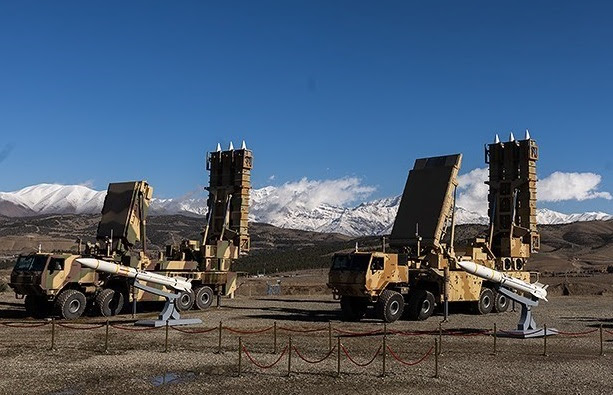
Image: 3-Arman anti-ballistic missile system, Hossein Zohrevand, CC BY-SA 4.0, via wikimedia commons.