Renewed anti-regime demonstrations have taken place in Iran around memorials for the thousands of people killed during last month’s brutal crackdown. In January, the Islamic Revolutionary Guard Corps, its Basij militia and Tehran-backed proxies from outside Iran used live fire against protesters and murdered some seeking treatment in hospitals in order to quell the largest protest movement in the Islamic republic’s four-decade long history.
The protests come as the US and Iran are expected to hold further talks this week over its nuclear programme. Tehran is believed to be seriously considering a combination of sending half of its most highly enriched uranium abroad, diluting the rest, and taking part in creating a regional enrichment consortium.
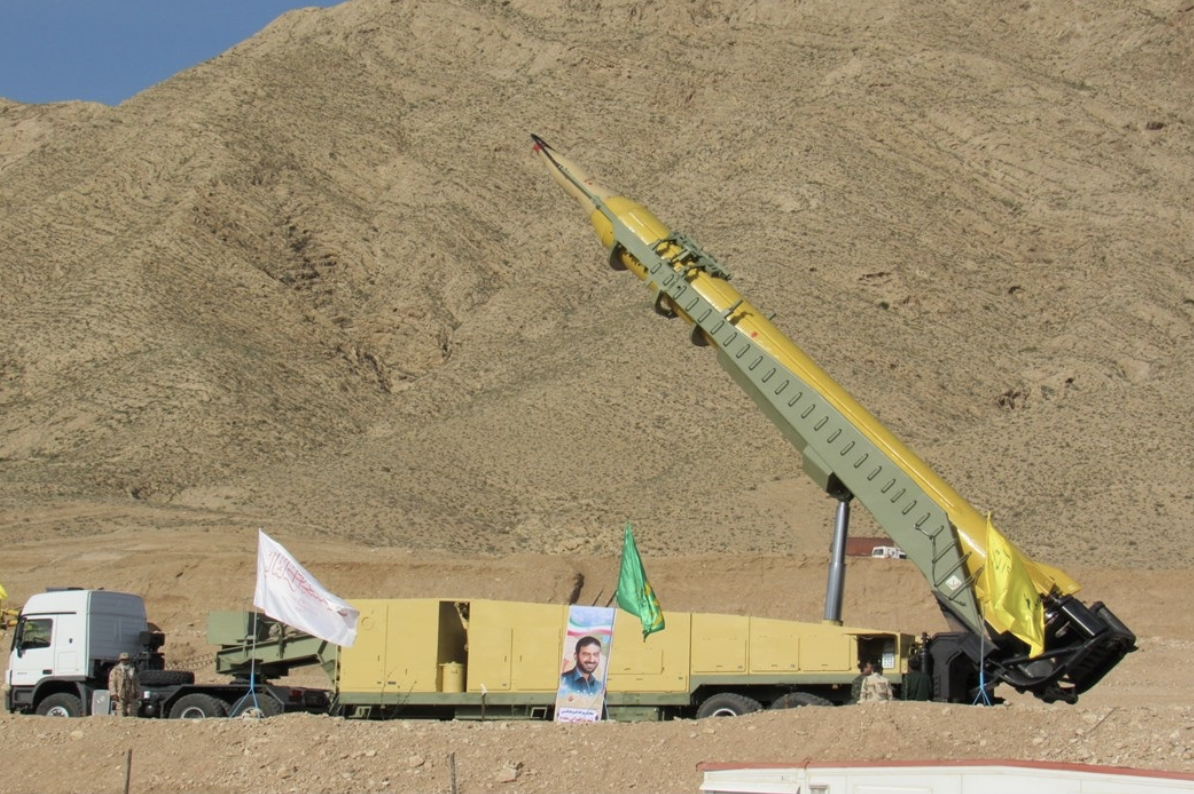
The US has insisted Iran cannot have nuclear weapons or the capacity to build them and that it cannot enrich uranium. Iran, which openly seeks Israel’s destruction, has enriched uranium to levels with no peaceful purposes, developed a large ballistic missile arsenal and was said by Israel to be fast-progressing toward weaponisation before last June’s 12-day Israel-Iran war.
Donald Trump has warned that limited strikes against Iran are possible. The US has built up a formidable military presence in the region with a view to extracting concessions from Tehran. These include two aircraft carrier strike groups, representing a larger range of assets than the US had in place last summer when it struck Iranian nuclear sites.
In exchange for concessions on its nuclear programme, Iran wants the US to lift economic sanctions which have crippled the country’s economy. Despite continued US engagement with Israel, the Israeli government has voiced its concern about the narrowness of the continuing negotiations. Tehran refuses to negotiate on ending its ballistic missile build-up and support for terrorist proxies such as Hezbollah, the Houthis and Hamas.
Critics say the US negotiations appear to be attempting to revive something akin to the 2015 nuclear deal which Trump fiercely opposed and from which the US unliterally withdrew during his first term. It is feared that a narrow nuclear only-focused deal will, like the 2015 agreement, allow the regime to use sanctions relief to increase support for its regional proxies and buttress its ballistic missile programme.
Iran’s supreme leader, Ayatollah Ali Khamenei, has appointed a top national security official as caretaker of the regime in case of a targeted killing and has gone into hiding. He is reported to have chosen Ali Larijani to run the country as his successor. Larijani is a former IRGC commander. The IRGC – which is charged with safeguarding the Islamic revolution at home and spreading its tenets internationally – reports directly to the supreme leader. Larijani, a former parliamentary speaker from a powerful clerical family, is the secretary of the supreme national security council, which is responsible for managing negotiations over the country’s nuclear programme and oversaw last month’s massacre of a reported 30,000 protesters. In addition to accelerating its ballistic missile production, Iran is believed to have concluded a $500m arms deal with Russia to acquire thousands of advanced shoulder-fired missiles. The agreement commits Russia to deliver 500 man-portable “Verba” launch units and 2,500 “9M336” missiles over three years. Russia and Iran are close strategic allies, with the latter providing extensive support for Moscow’s illegal invasion of Ukraine, including supplying drone and ballistic missiles.
For more on Iran’s nuclear programme, read Stopping Iran Going Nuclear.